

· AFX Research
Easements Over a Dam or an Impoundment, What the Record Shows
A private lake runs on a dam somebody owns and somebody has to maintain. What the flowage easement covers, and the obligations that come with the structure.
Table of Contents
A buyer looks at a house on a thirty acre private lake and asks the ordinary questions about shoreline and docks. The question nobody asks is who owns the dam at the far end, who is obliged to maintain it, and what happens when the state dam safety office issues a deficiency order with a six figure price tag. On a private impoundment the dam is the whole arrangement, and the rights and obligations around it are partly recorded and partly not. This is the structural end of the subject in flowage and flood easements.
What a dam easement covers
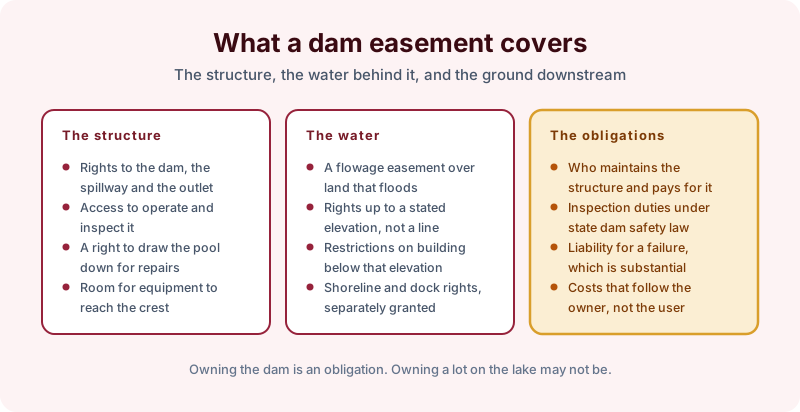
The structure needs rights of its own. Access to the dam, the spillway and the outlet works. A right to operate and inspect. A right to draw the pool down for repairs, which temporarily ruins everybody’s lake frontage and is essential. And room for equipment to reach the crest, which on an old dam may cross three properties.
The water needs a flowage easement over the land it covers, and the good ones are written to an elevation rather than to a line on a map, because the water moves and a line does not. Below that elevation, building is restricted. Shoreline and dock rights are usually granted separately, and are frequently assumed rather than held, which is the trap in waterfront and lake access easements.
The obligations are where the money is. Who maintains the structure and funds it. Inspection duties under state dam safety law, which apply to the owner regardless of whether anyone is enjoying the lake. Liability for a failure, which on a dam with homes downstream is substantial. Those costs follow the owner of the dam rather than the owners who benefit from the water, unless a recorded agreement says otherwise.
Where the records sit
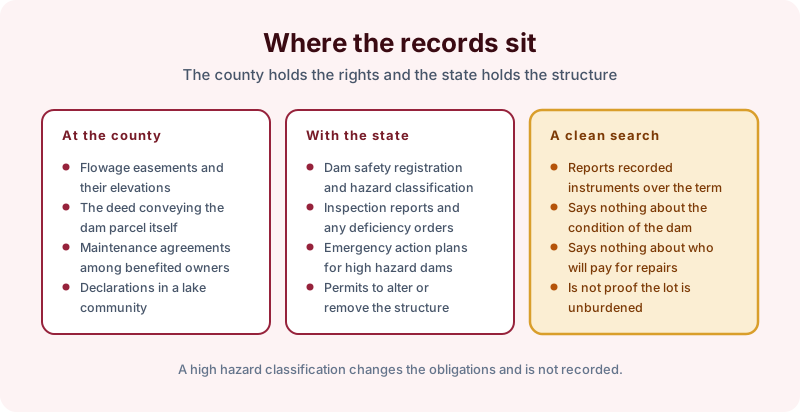
At the county you will find the flowage easements with their elevations, the deed conveying the dam parcel itself, maintenance agreements among the benefited owners where somebody drafted one, and the declarations in a lake community.
With the state sits the dam safety registration and its hazard classification, inspection reports and any deficiency orders, emergency action plans for high hazard structures, and permits to alter or remove the dam. None of it is recorded.
That gap is the important one. A search reports recorded instruments over the term searched. It says nothing about the condition of the dam, nothing about who will pay for repairs, and a clean report is not proof a lot is unburdened. Prescriptive rights can also arise without a recorded instrument, and a search is not a survey, so it does not locate the flood elevation on the ground.
The question to ask before buying on a private lake
Who owns the dam, and what does the recorded arrangement say about paying for it.
The best answer is a lake association owning the structure with a recorded maintenance agreement, an assessment power and a funded reserve. A workable answer is a single owner with recorded cost-sharing from the benefited lots. The answer that causes trouble is one landowner who happens to own the dam parcel, no agreement, and twenty neighbors who enjoy the lake and owe nothing toward it. A high hazard classification turns that from an inconvenience into a genuine liability, and the classification is not recorded anywhere a buyer would look. This sits close to who maintains and repairs an easement.
Scoping the search
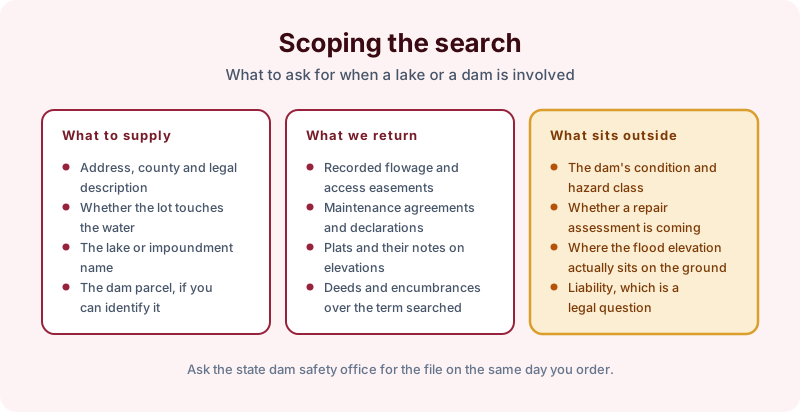
Give us the address, county and legal description, whether the lot touches the water, the lake or impoundment name, and the dam parcel if you can identify it. What comes back is the recorded flowage and access easements, the maintenance agreements and declarations, the plats with their elevation notes, and the deeds and encumbrances over the term searched.
Ask the state dam safety office for the file on the same day, because the hazard classification and the inspection history decide what the obligation is actually worth.
The takeaway
On a private impoundment the dam is the asset and the liability at once, and the recorded documents tell you who holds which. Find the dam parcel, read the maintenance arrangement, and get the state file before closing. Start the order online, or send us the address and the lake name and we will tell you which term fits and what it would and would not cover before anything is ordered.