

· AFX Research
Rights Reserved in an Original Land Patent, and Easements
The first conveyance out of public ownership rarely gave away everything. What the United States kept, why short searches never find it, and what that means.
Table of Contents
Every privately held parcel in the western two thirds of the country began as a patent — a conveyance from the United States to the first private owner. Most people never see one, because a current owner search stops seventy years short of it and even a full chain often stops at a convenient root of title. What the patent did or did not reserve, however, binds every owner who came afterward, and on rural and semi-rural land it is a live question rather than a historical curiosity.
What the original grant kept
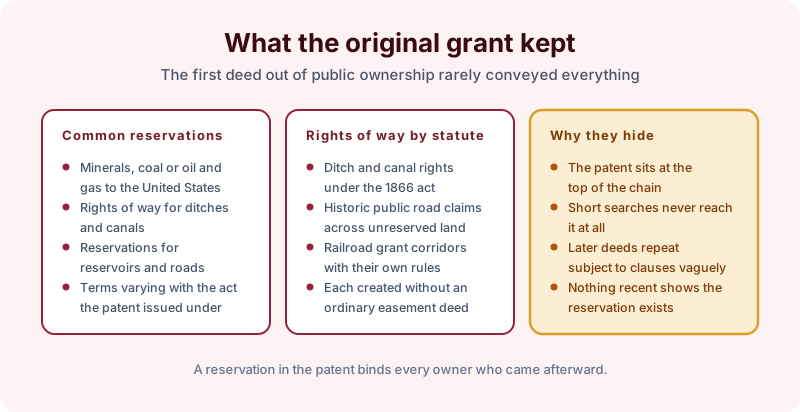
Reservations vary with the act the patent issued under, and they are more common than people expect. Minerals, coal, or oil and gas reserved to the United States, which is the reservation most likely to surface today. Rights of way for ditches and canals. Reservations for reservoirs and for roads. A homestead patent, a stock-raising homestead patent and a railroad grant each carry different terms.
Alongside the express reservations sit rights of way created by statute rather than by deed. Ditch and canal rights under the 1866 mining act, which behave much like the arrangements in irrigation ditch and canal easements. Historic public road claims across land that was unreserved at the time. Railroad corridors with their own body of law about what happens when the line is abandoned — the subject of railroad right of way easements.
None of these was created by an ordinary easement deed, which is exactly why they hide. There is no instrument in the 1970s or 1990s to find. The patent sits at the very top of the chain, later deeds repeat a vague “subject to reservations of record” clause that nobody reads, and nothing recent indicates that anything was ever reserved at all.
Finding it in the chain
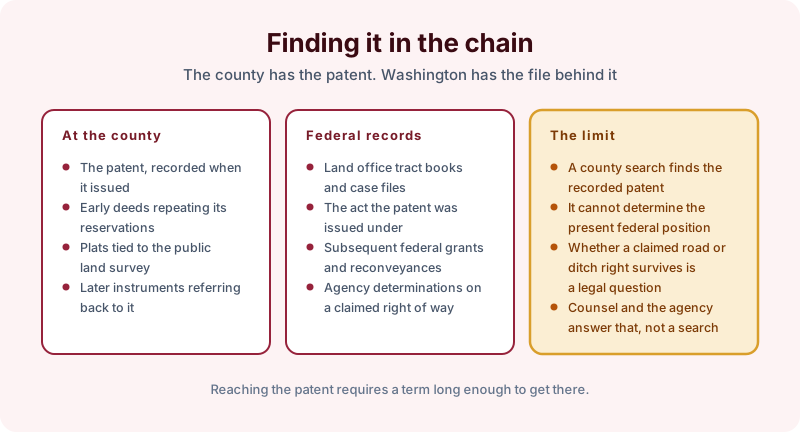
The county holds a good deal. The patent itself, recorded when it issued in most places. The early deeds that repeat its reservations in full before the language degraded into boilerplate. Plats tied to the public land survey system, and later instruments referring back to the original grant.
The federal records hold the rest. Land office tract books and case files, the act under which the patent issued, subsequent federal grants or reconveyances, and any agency determination about a claimed right of way.
The limit is worth stating precisely. A county search finds the recorded patent and what the chain says about it. It cannot determine the present federal position, and whether a claimed road or ditch right still exists is a legal question. That belongs to counsel and to the agency, not to an abstractor, and it is the same boundary drawn in access easements across federal and state land.
Why the search term is the whole decision
This is the practical point. A twenty year search will not reach a patent and neither will a thirty year one. On land patented in 1904, the instrument that matters is a hundred and twenty years old, and the only way to see it is to buy a term that reaches it.
That is not an argument for always buying the longest search. It is an argument for asking a specific question before ordering — whether this parcel plausibly carries a federal reservation, which on land adjoining public ground, on former homestead ground, or anywhere a ditch crosses the property, it very often does.
Scoping the search
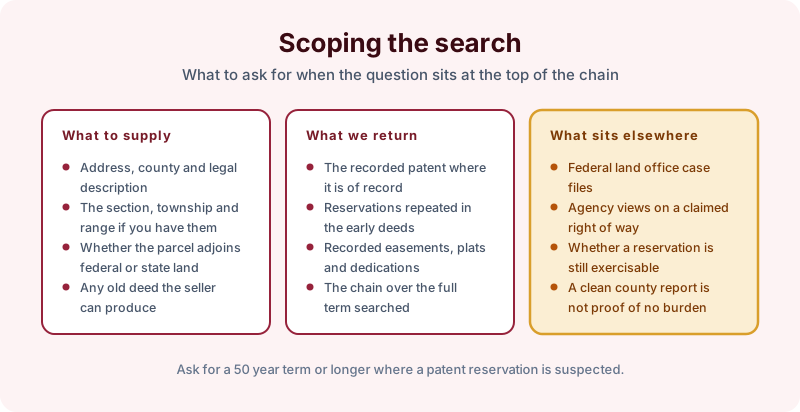
Give us the address, county and legal description, the section, township and range if you have them, whether the parcel adjoins federal or state land, and any old deed the seller can produce. What comes back is the recorded patent where it is of record, the reservations repeated in the early deeds, the recorded easements, plats and dedications, and the chain over the full term searched.
Federal case files, agency views on a claimed right of way, and whether a reservation remains exercisable all sit outside a county search. A clean county report is not proof that no burden exists.
The takeaway
The oldest instrument in the chain is frequently the one that decides what the land actually carries, and no short search will ever see it. Where a federal reservation is plausible, ask for a term long enough to reach the patent. Start the order online, or send us the address and the legal description and we will tell you which term fits and what it would and would not cover before anything is ordered.