

· AFX Research
Wellhead Protection Areas and What the Land Record Shows
A circle drawn around a public well can restrict what you may do on your own ground, and most of that restriction is never recorded against your parcel at all.
Table of Contents
A buyer looks at ten acres on the edge of a small town, planning a contractor’s yard with fuel storage for the fleet. The title search is clean, the zoning permits the use, and the permit application is refused because the parcel sits inside a wellhead protection area serving the municipal supply half a mile away. Nothing about that restriction appeared in the land record, and in most states nothing about it ever will. It is a regulatory burden sitting on top of a parcel, and it behaves very differently from the recorded easements this site usually deals with.
What a protection area does
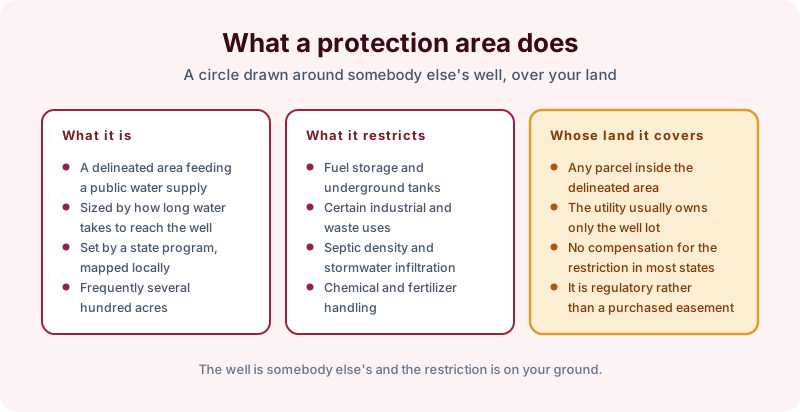
A wellhead protection area is a delineated zone feeding a public water supply, sized by how long water takes to travel underground to the well. A one-year or five-year capture zone can cover several hundred acres, and the boundary is drawn by hydrogeology rather than by property lines.
What it restricts is the set of activities most likely to reach groundwater. Fuel storage and underground tanks. Certain industrial and waste handling uses. Septic density and stormwater infiltration. Chemical and fertilizer handling.
Whose land it covers is the point. Every parcel inside the delineated area is affected, and the water utility typically owns only the small lot the well sits on. In most states there is no compensation, because this is regulation rather than a purchased property interest. The utility did not buy anything from you; a program drew a line and your ground is inside it.
How the rules reach you
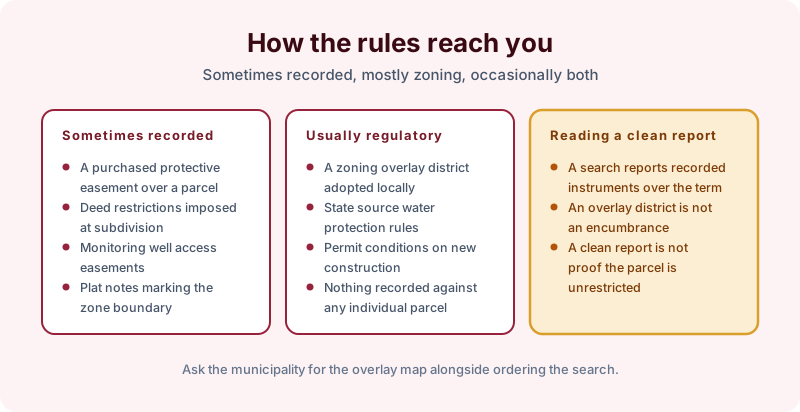
Sometimes there is a recorded instrument. A protective easement the utility actually purchased over a sensitive parcel. Deed restrictions imposed when land near the wellfield was subdivided. Monitoring well access easements. Plat notes marking the zone boundary.
Usually there is not. The restriction arrives as a zoning overlay district adopted by the municipality, as state source water protection rules, or as conditions attached to a construction permit. None of that is recorded against an individual parcel, so none of it appears in a chain of title.
That produces a limit worth stating directly. A search reports what was recorded and indexed over the term searched, and an overlay district is not an encumbrance in that sense. A clean report is not proof the parcel is unrestricted, which is the same honest boundary described in easements and title insurance exceptions.
What to do about it
Ask the municipality for the overlay map and the ordinance text, at the same time as ordering the search. Those two documents together describe what the parcel actually carries, and neither one alone does.
Where the intended use is one the zone restricts, the question becomes whether a variance or a conditional permit is available, which is a planning matter rather than a title one. And where a protective easement was in fact purchased and recorded, a search finds it and it binds permanently rather than at the pleasure of a council that could amend an overlay. That distinction is the one drawn in conservation easements and the record.
Scoping the search
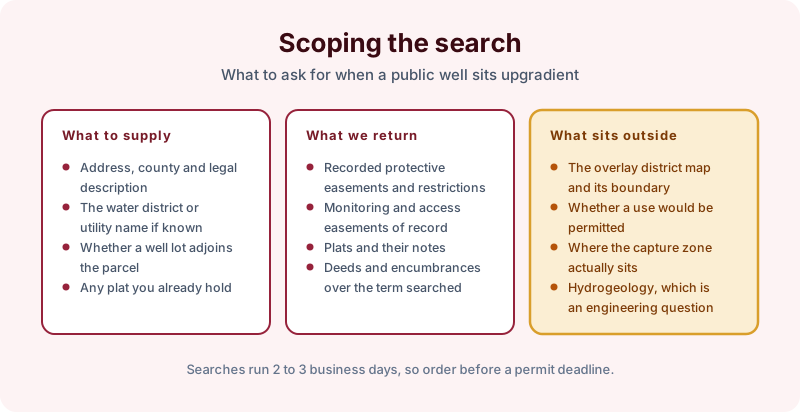
Give us the address, county and legal description, the water district or utility name if known, whether a well lot adjoins the parcel, and any plat you hold. What comes back is the recorded protective easements and restrictions, the monitoring and access easements of record, the plats with their notes, and the deeds and encumbrances over the term searched. Our search packages set out the terms available.
What sits outside is the overlay map and its boundary, whether a use would be permitted, where the capture zone actually sits, and the hydrogeology behind it.
The takeaway
This is a burden that behaves like an easement and is not one, which is precisely why a clean title report is misleading on it. Order the search for the recorded side and the overlay map for everything else, before committing to a use that depends on fuel, chemicals or septic capacity. Start the order online, or send us the address and the county and we will tell you which term fits and what it would and would not cover before anything is ordered.